Enhanced TV Show & Mobile TV Forum in London

I am going to speak at the Enhanced TV Show & Mobile TV Forum in London at the 29th of September. It will be an interesting conference. My presentation starts at 1050:

The mobile phone as a remote, television set and production tool
Eirik Solheim, Programme Manger of
Interactive Television, NRK, Norway

• NRK’s experience in distribution to mobiles
• Using the mobile phone as an interactive remote for enhanced TV
• The mobile in the production chain for both professional and user generated content

If you plan to be there, don’t hesitate to contact me!

Enhanced TV Show & Mobile TV Forum in London

Banned video on Google

I recently posted some thoughts on the fact that Google Video just released their own video plugin. So of course I had to download it and try it out.

My first impression:
– At this point only available for windows
– Easy to install
– Very basic functionallity:
a) The videos play directly in the browser
b) You can click the video for fullscreen

Huge amounts of the videos are not available for playback yet. I guess it is due to the non existent payment system.

However, as mentioned in my previous article I do not think that this is going to be a success before Google adds an interface that fits into a more traditional setting for use of video content. In other words, a frontend for the different media center systems out there.

A video banned by the Norwegian government
While browsing around the videos I searched for the keyword “Norway” and deep down I suddenly found a music video by a Norwegian rap group called “Gatas parlament” (The parliament of the streets). From the description of the video at Google:

Protesting U.S. foreign policy, the Norwegian rap group Gatas Parlament created this video entitled “Kill Him Now.” Under pressure from the U.S., this was banned by the Norwegian government who claim that the video advocates direct violent action against President Bush, rather than peaceful protest. Consequently, it’s become a major free speech issue in Norway.

It says in the text that this is a subtitled version. But it is not. I don’t know if this is due to some kind of censorship from Google. If you want to see the subtitled version it can be found over here.

Interesting technology this internet thing. A video banned in Norway due to pressure from the US government now available to millions directly from an American company…

Banned video on Google

Google Video and Media Center Edition

Now, I have some suggestions on this one! John Battelle just announced that Google will launch an in-browser video playback feature based on the open source VLC media player. That should be very interesting for both content creators and the people making media center software.

Google have some plans
They have already launched their video search function and made available a video upload function. They are working on a payment system and now they will announce a player. According to John Battelle they will also include their player in the open source program called Google Code. In other words, the system will be open for people to make all kinds of players and boxes utilizing the content that builds up in the Google video archives. That will also lead to systems that can read video from both Google and other video distribution systems.

Considering the way a media center has accelerated my use of high quality video from my computer, a media center front end to Google Video would be very interesting. Because of Google’s open approach, I guess someone will make that kind of frontend for Google Video quite fast. Including a plugin for Microsoft’s Media Center Edition.

VLC Media Player is by far the most platform independent media player out there. The only problem is the fact that it could seem slightly difficult to set up and the GUI itself a bit too complicated for the average user. A version from Google could fix this. Use the very powerful core in the VLC Player and build a user friendly interface on top of it.

The fact that the VLC player is platform independent should also make it very interesting for large content producers and public broadcasters. Quite a bit of the dedicated set top boxes for TV out there run Lunix as the operating system. To make a frontend for Google Video on a cheap set top box seems to be an interesting option as well.

But what about content?
Continue reading “Google Video and Media Center Edition”

Google Video and Media Center Edition

Eirikso on the Mediacenter Show

Ian Dixon’s brilliant Media Center Show has reached episode #14. And this time he’s had a chat with the admin of eirikso.com. That happens to be… me… As a modest geek that spent years of education to make sure he always could stay behind the camera I am honoured to guest the show.

I was invited to talk about the little roundup I did of different media center softwares. We had a nice chat about that, and a lot of other digital media related issues.

Pick up your player or listen directly on your computer
This is dedicated content for the people that are interested in HTPCs in general and Windows Media Center Edition in detail. It is time to pick up whatever audio player you have and start subscribing. My favourite is to use my Nokia 6630 cellular to listen to podcasts. Have a look at my guide here.

The simplicity of the technology behind a show like this is interesting.
Ian calls me up through Skype. I’m in Norway, he’s in the UK. He records the conversation, edits it and posts it on his web page. People out there subscibe to the feed and get the show as soon as he has published it. The audio quality of the Skype conversation is far better than any regular phone line.

Related posts:
Everything under my HTPC category and Windows MCE category.

Eirikso on the Mediacenter Show

Placeshifting – your media everywhere

Placeshifting, the art of making your media available where you want it.
Okay, you have a computer at home with some music, some pictures and some video files. Maybe you also have connected a TV-card and a web cam. Now, how cool would it be if you could access all of this whenever you where connected to the net with a device that was able to play your media?

This has been possible for quite a while, but as much of the stuff that is possible with computers, it has been too difficult to set up. To make streaming of media out of your home happen doing advanced firewall configuration and setting up a DynDNS service was necessary.

Content owners – watch out!
I said was. I have written about ORB and SlimServer here before, and I am still amazed over how well ORB works. What makes it especially interesting for content producers and copyright lawyers is the fact that it makes your own media inependent of borders and regulations regarding protection of content within countries.

I have all my Norwegian television channels available no matter where I am. At the same time the content producers work hard on their business model that depends on dividing the world in regions.

Availability
MP3 is a technology that forced its way through despite the fact that it was not marketed and actually heavily worked against by the music industry. People wanted availability. Actually people was willing to sacrifice quality on behalf of availability. (While the music industry was working hard making Super Audio CD because they thought that people wanted better quality).

Placeshifting is all about availability. After using ORB for a while I have been quite addicted to having my music available on all my computers. At work. At a friends house. On my mobile.

So what do I do?
Continue reading “Placeshifting – your media everywhere”

Placeshifting – your media everywhere

How Bob the Millionaire became a pirate

TVNorge have done reasearch that shows a loss of about 10% of the viewers on the series “Lost” to filesharing and bittorrent. I am puzzled by the fact that the big studios don’t get the point. If they have a look at the music industry they can see parts of the solution. One of them is called iTunes Music Store. Or, to be very precise: legal and user friendly alternatives.
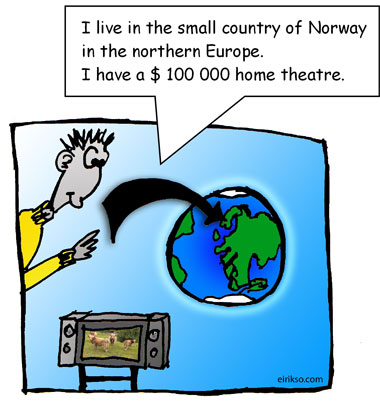
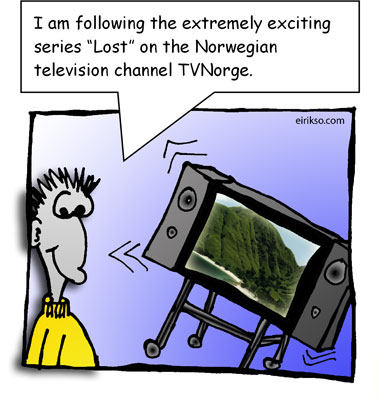
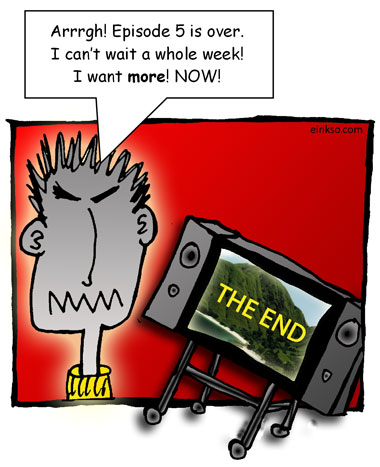
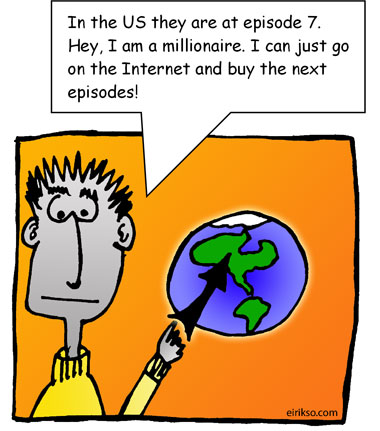
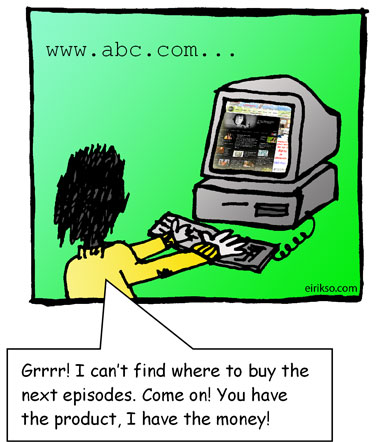
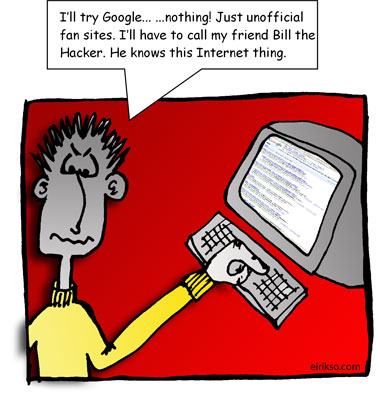
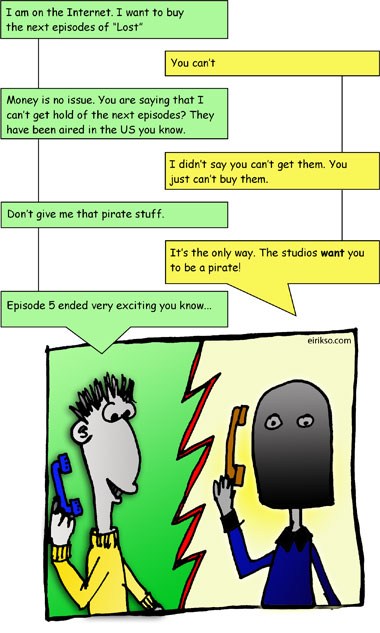
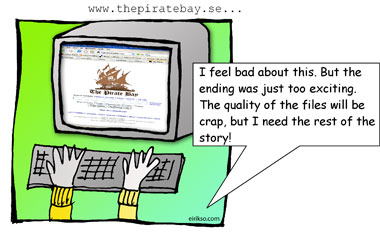
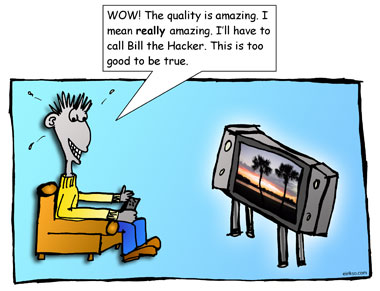
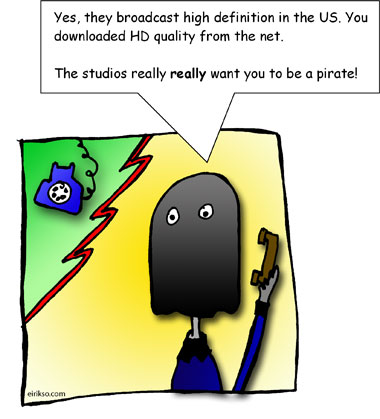
The reason why so many people downloaded Lost here in Norway is the fact that we got the episodes months behind the US. So, the brilliant story telling in Lost became the biggest motivation for download of new episodes from the net. The people in the movie and television industry are wizards at visual communication. In a hope that they might get the point I have taken up the art of comic drawing. Something that I have not done since the age of 14. You can clearly see that in my story about Bob the Millionaire, but the message is the important stuff here. The strip about Bob the Millionaire is based on a true story. And, Bob the Millionaire is in for a very pleasant surprise:

01bob

02bob

03bob

04bob

05bob

06bob

07bob

08bob

09bob

10bob

11bob

Do-you-get-it? Bob could not resist. And as a bonus he gets the episodes in a quality that no Norwegian television stations can give you today. Related post: Help for the left behind Yes, they will release Lost on DVD in Norway, but what quality? Probably standard definition. So, even if it was possible to buy Lost you would get better quality through BitTorrent… Hello? Anybody home? And, here’s a list of simple hints for the movie industry: 1. As already mentioned: make user friendly, high quality alternatives to illegal download 2. Remember: the world is connected! : The system of different regions on DVD was a bad idea even at the point where DVD was born back in 1996 : To even think about dividing the planet into something other than 6 billion potential viewers is utterly ridiculous 3. Availability! People want to play their content on all their devices Feel free to add more hints to the movie industry here by adding comments.

How Bob the Millionaire became a pirate